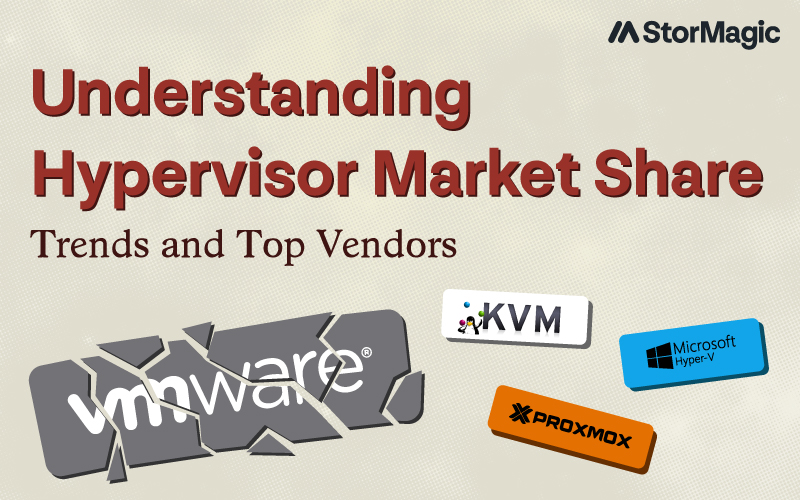
The last few years have seen the hypervisor market enter a period of change. What started as Broadcom’s acquisition of VMware in late 2023 has become a catalyst for the most significant shift in enterprise virtualization technology in over a decade.
Today, IT leaders face a reality where the perpetual VMware licenses are gone, replaced by subscription models and rigid three-year commitments. Today’s market has forced businesses to confront difficult questions about their virtualization strategy, costs, and vendor dependencies.
Hypervisor Market Share 2025
The hypervisor market size is projected to grow at a compound annual growth rate (CAGR) of 29.78% from 2024 to 2030, with the global total market expected to reach a value of $9.70 billion by 2030. In direct relation to this, the global HCI market is predicted to reach $49.75 billion by 2030.
Type-1 hypervisors currently dominate the enterprise virtualization market due to their performance, security advantages, and direct hardware access, making them the standard choice for production workloads and mission-critical applications. These bare-metal hypervisors run directly on server hardware without an underlying operating system, minimizing overhead and reducing potential attack surfaces.
However, type-2 hypervisors are expected to grow faster due to their cost-effectiveness and ease of integration with existing systems. Type-2 hypervisors run on top of a host operating system and serve a different market segment entirely. They’re primarily used for desktop virtualization, development and testing environments, and personal use cases where ease of setup and lower barriers to entry are more important than maximum performance.
Deciding on what’s right for your business remains dependent on your specific goals, and in terms of vendor choice, well, there’s more than ever! Read more about the differences between type-1 and type-2 hypervisors.
How VMware Licensing Choices Changed Everything
Broadcom’s decision to eliminate perpetual VMware licenses represents more than a pricing adjustment. The company targets $8.5 billion in pro forma EBITDA from VMware within three years, a goal that requires fundamental changes to how customers buy and use the virtualization software.
The numbers tell the story. Organizations that previously purchased VMware licenses outright now face recurring subscription fees and mandatory three-year commitments. For many businesses, particularly enterprises managing edge environments, these changes have made VMware financially unsustainable.
It’s predicted that navigating this licensing shift will prove long, expensive, and risky for customers throughout 2025. The subscription model creates ongoing financial pressure that many organizations struggle to absorb, especially when combined with more frequent compliance audits and reduced flexibility in license management.
Migration Fears vs. Hypervisor Market Reality
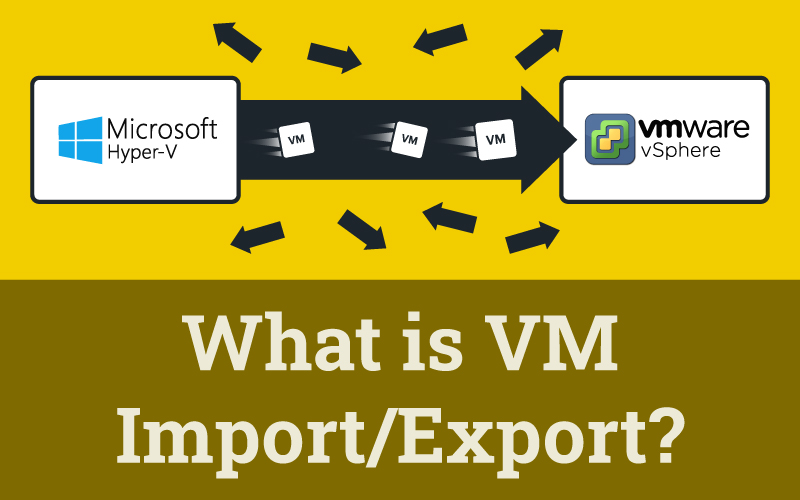
The prospect of migrating away from VMware often triggers anxiety among IT teams. However, newly developed VM migration tools now provide automated workload discovery, streamlined VM migration, and phased implementation approaches that minimize business disruption.
Organizations can migrate non-critical workloads first, build confidence with hybrid environments, and move at their own pace rather than facing a disruptive scenario.
What’s Driving Change in the Hypervisor Market Share and HCI Adoption?
The hypervisor market transformation coincides with broader technology trends that favor hyperconverged infrastructure solutions.
Edge Computing Demands New Infrastructure Decisions
Edge computing continues to generate massive data volumes, particularly from IoT devices. This data often exceeds network capacity for cloud processing or creates prohibitive latency issues. HCI provides a cost-effective alternative to traditional servers for edge workloads, offering clustered operations that deliver hardware redundancy at lower costs than conventional server mirroring.
Operational Efficiency Drives Standardization
Rising costs and security risks push organizations toward IT complexity reduction. HCI adoption enables standardization across infrastructure components, reducing management overhead and maintenance costs while improving security posture through unified platforms.
Alternative Solutions Reshape Vendor Landscape
The VMware licensing crisis has accelerated innovation among alternative hypervisor vendors. These companies have developed solutions that specifically address the cost and flexibility concerns. The 2024-25 DCIG TOP 5 SMB/Edge VMware vSphere Alternatives Report identifies leading vendors that have demonstrated their ability to deliver dependable, cost-effective solutions.
These alternatives don’t require extensive customization or complex integration. Instead, they provide turnkey solutions designed for specific business needs rather than bolt-on functionality.
How to Make Strategic Decisions for the Current Hypervisor Market Share
Consider the following key factors:
- Cost – compare VMware licensing against competing solutions.
- Migration – assess your infrastructure complexity, resources, and timelines.
- Future Fit – align your vendor roadmaps with business goals.
Making the right decision requires a clear comparison of licensing costs and capabilities against other available solutions. It also means assessing the complexity and timelines of any potential migration, and ensuring each vendor’s roadmap aligns with long-term business goals.
The market will continue evolving, and new solutions in the space are introducing competitive pricing, additional features, and more flexible terms. This creates an environment where organizations can evaluate the best fit for their operational and strategic needs.
For many, this period represents an opportunity to modernize their on-site virtualization solutions and infrastructure, manage costs effectively, and increase operational flexibility. Excitingly, the hypervisor market in 2025 offers both stability and innovation, allowing organizations to choose the approach that best aligns with their vision for the years ahead. Read more about hypervisors in our beginner’s guide.